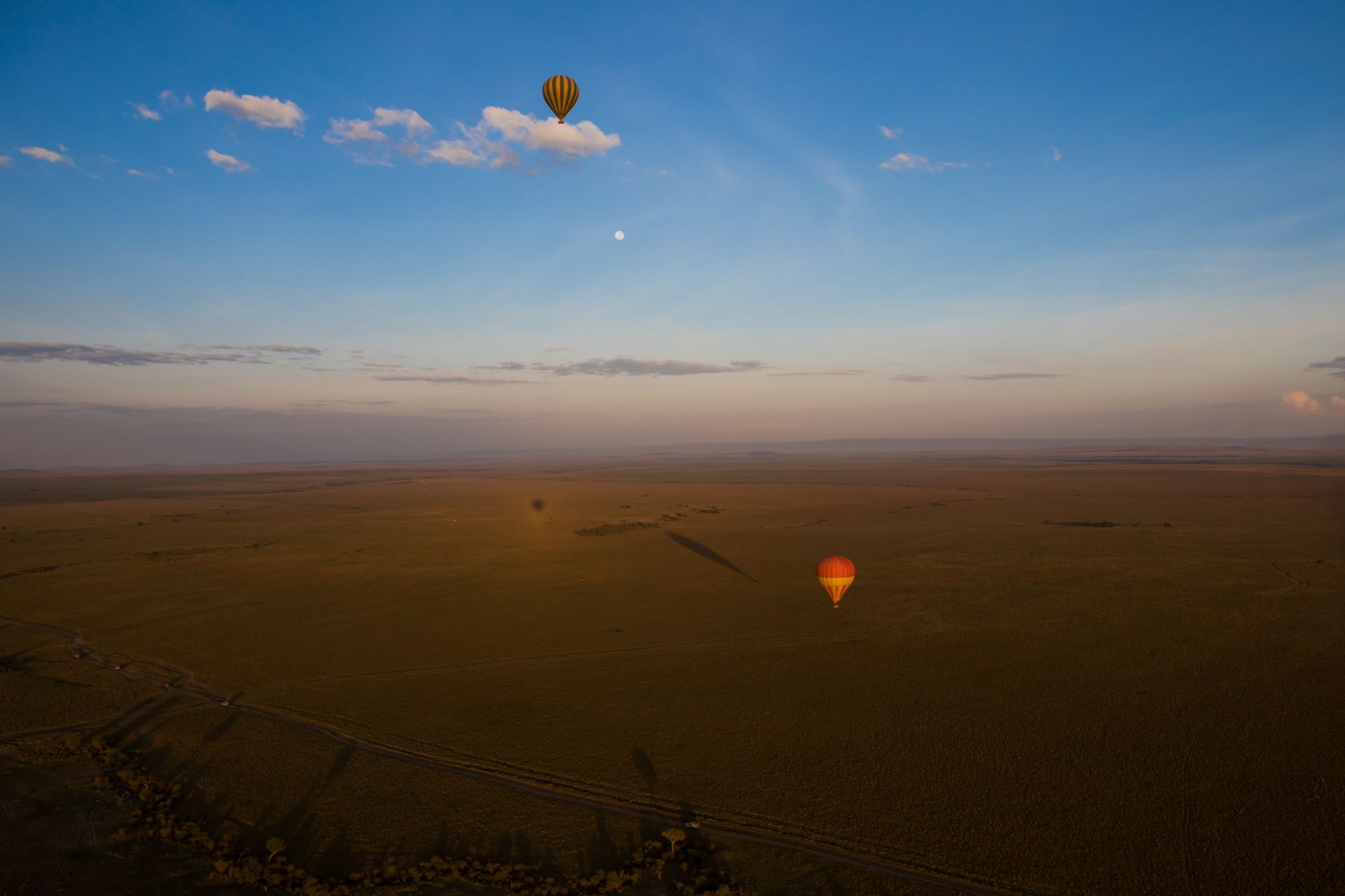
Couples planning a Kenya or Tanzania honeymoon almost always ask the same question at some point: is a Serengeti balloon safari worth it at $599 per person? It is a fair question, since that price buys roughly an hour in the air with no guarantee of what you will see below. This post compares the Serengeti balloon against its closer, cheaper cousin in the Maasai Mara, so you can decide which splurge actually fits your trip.
Is a Serengeti Balloon Safari Worth It?
Yes for most couples, but conditionally. At $599 per person it is worth it if you fly June through October for peak migration odds and treat wildlife sightings as a bonus rather than the whole point. It is a weaker choice if close-up animal sightings are your main goal or your budget is tight, since ground game drives cost less and deliver more reliable viewing.
The honest version of this answer, missing from most reviews, is that “worth it” depends almost entirely on timing. Fly over the Western Corridor or Northern Serengeti during migration season and the experience earns its price. Fly in the shoulder months and you are mostly paying for sunrise scenery and a champagne breakfast, which is still lovely, just a different kind of value.
What’s Included in the $599 Serengeti Balloon Safari Cost?
The $599 covers hotel pickup around 4:30 to 5am, the 45 to 75 minute flight, a champagne toast on landing, a full bush breakfast, and a flight certificate. It excludes Serengeti park entry fees, guide and pilot tips, typically $10 to 20, and any photo prints or camera gear rental sold on-site.
Worth noting: this Serengeti balloon safari price sits well above the Maasai Mara equivalent. The gap is not always explained by what you get in return. Park fees alone in Tanzania run higher, and those costs get passed on somewhere in the itinerary even when they are not itemized in the balloon quote itself.
What Are the Best Months for a Serengeti Balloon Safari?
June through October gives the clearest skies and puts you over the Western Corridor or Northern Serengeti during the Great Migration, the best odds for seeing herds from the air. December through March, over the Southern Serengeti and Ndutu, suits calving season and thinner crowds. April and May carry a real weather cancellation risk and are best avoided if the flight matters to your trip.
If you are still deciding when to travel at all, our guide to the best month for Serengeti wildlife breaks down predator activity by season, which lines up closely with the balloon’s best flying months.
What Does a Typical Balloon Morning Actually Look Like?
Pickup is 4:30 to 5am, followed by a 20 to 30 minute drive to the launch site and a 10 minute safety briefing. The flight itself runs 45 to 75 minutes and can reach up to 1,000 feet. After landing, a table-service bush breakfast takes 45 to 60 minutes, and you are back at camp by 9 or 10am. The whole morning runs about 4.5 to 5 hours from wake-up to return.
That timeline matters for honeymooners in particular. It is a genuinely early start, and it eats a chunk of what might otherwise be a slow, unhurried morning at camp.
Is a Serengeti Balloon Safari Good for Honeymooners?
For couples, the pros are real: sunrise silence, a private-feeling view of the plains, and a champagne breakfast that photographs beautifully. The cons are a 4:30am wake-up that clashes with a lie-in honeymoon pace, a shared basket of 12 to 16 people that limits privacy, and a cost that could instead fund an extra night in a premium tented camp.
If intimacy is the priority, ask your camp whether private balloon charters exist, though they cost meaningfully more than the standard shared flight. Otherwise, treat the balloon as one memorable morning within a longer trip rather than the trip’s centerpiece. For couples weighing this alongside gorilla trekking or other East Africa stops, how the Serengeti compares to other East Africa parks is worth reading before you commit the budget.
Serengeti Balloon vs Maasai Mara Balloon Safari: Which Is the Better Splurge?
The Maasai Mara balloon safari, in Kenya, runs $450 to $500 and launches closer to most camps. It often flies over denser resident wildlife outside migration months, making it the stronger value pick for a Kenya-based honeymoon. The Serengeti version costs more but wins specifically during July through October, when migration herds are concentrated in its Western or Northern sectors.
| Feature | Serengeti Balloon Safari | Maasai Mara Balloon Safari |
|---|---|---|
| Price per adult | $599 to $699 | $450 to $500 |
| Best months | June to October (migration in Western/Northern sectors) | Strongest July to October, decent year-round |
| Launch point | Often a longer transfer from camp | Usually closer to most Mara camps |
| Wildlife odds outside migration | Lower, depends on resident game near the launch site | Higher, the Mara holds dense resident wildlife year-round |
| Typical group size | 12 to 16 passengers per basket | Similar range, varies by operator |
For couples building a combined Kenya-Tanzania honeymoon, the practical move is often to fly the Mara balloon on the Kenya leg, since it is cheaper and closer to camp. Reserve the Serengeti flight only if your dates land squarely in migration season. Our Maasai Mara guide and notes on best time to visit Maasai Mara help pin down whether your Kenya dates will actually deliver strong balloon odds.
When Should You Book, and What Happens If It’s Cancelled?
Book two to three months ahead for July through October dates, since operators cap each flight at 12 to 16 passengers and peak season sells out. Weather cancellations, most common in April and May, are typically refunded in full or rebooked at no extra cost, since the pilot makes that call for safety. Cancellations for personal reasons rather than weather usually forfeit some or all of the deposit, so confirm the operator’s policy before paying.
What’s the Verdict for Honeymooners?
If your Tanzania dates fall in the July to October migration window and the sunrise moment matters more than guaranteed close-up sightings, the Serengeti balloon safari is worth the $599 and then some. If your trip is Kenya-based, or your dates miss migration season, the Maasai Mara balloon at $450 to $500 is the more sensible splurge. It frees up budget for an extra night somewhere memorable. Couples building a longer combined trip should also look at planning a full Kenya honeymoon itinerary before locking in either flight. The balloon decision often shifts once the full route is mapped out.
Where Can You Find More Safari Planning Resources?
- Best time to visit Kenya map from SafariPure
- Masai Mara Great Migration guide from Trunktrails Safaris
- Best time to visit Kenya month-by-month map from Valley Safaris
- Compare Kenya safari packages on FindMySafari
Once you know which balloon fits your dates, compare safari operators on FindMySafari, Valley Safaris, or Trunktrails Safaris to see current packages and availability before you book.